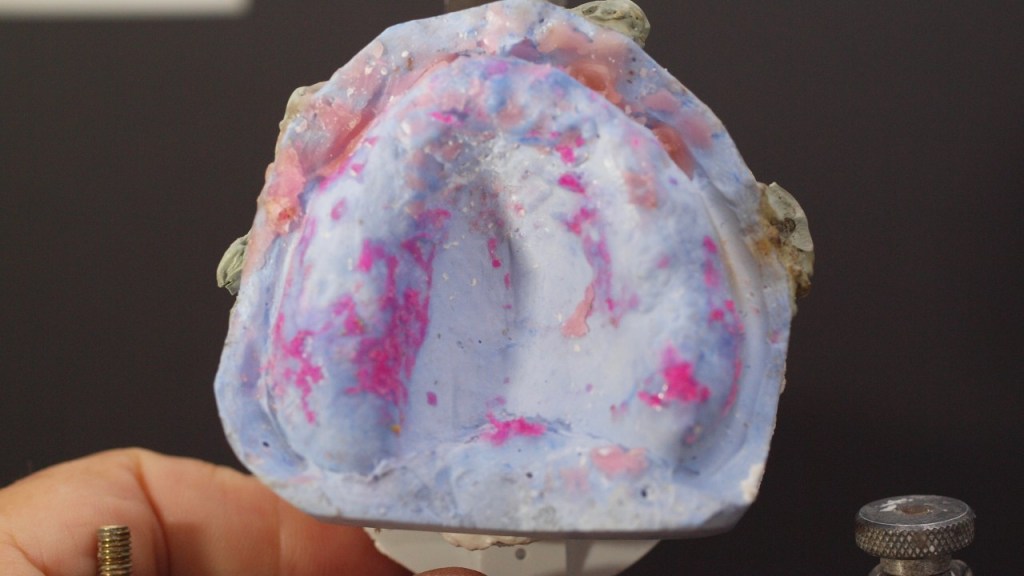
Denture adhesive transferred from baseplate to model. Indicates lack of infection control.
That adhesive used to stabilize a baseplate during records and try-ins is activated and holds saliva and if not disinfected and washed clean, is imbibed into the surface of the model? Its gypsum and as such its porous. Sending a case to a lab without cleaning off and disinfecting the baseplate and model is a cross-contamination issue and a violation of trust between both doctor and patient, and doctor and lab. Although the lab disinfects upon arrival, anything in contact with the model has had sufficient time to penetrate the stone. Packaging materials are now also suspect and must be discarded. Instrumentation also needs to be disinfected.
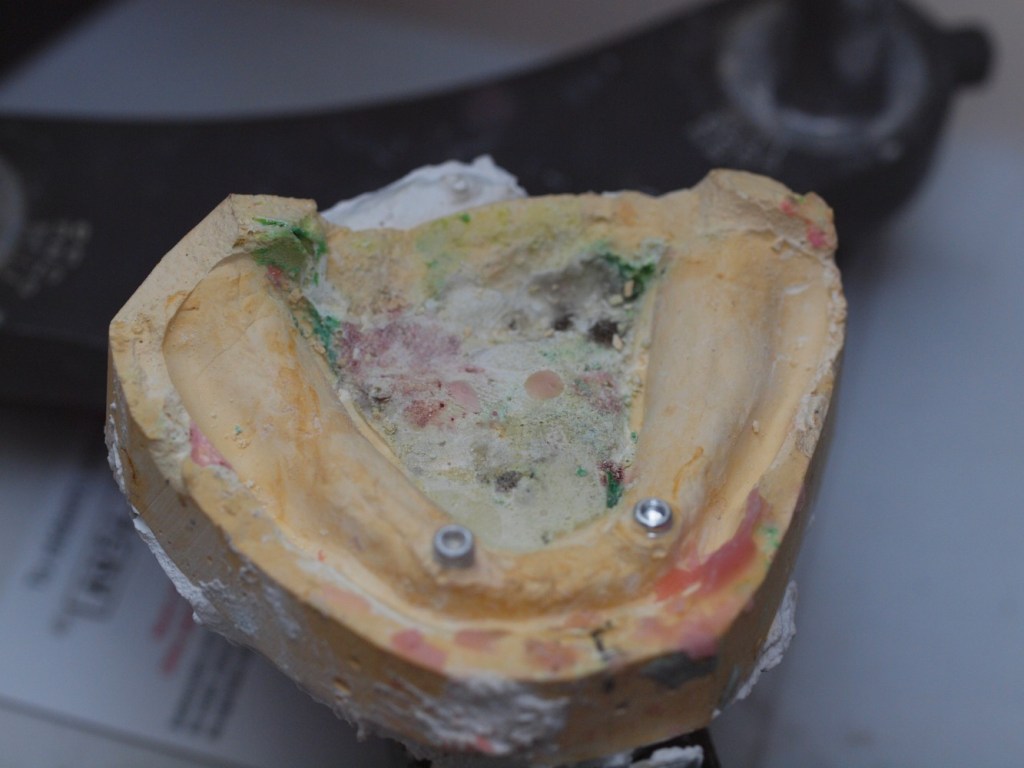
The green color is Play-Doh, but I suspect the black is mildew or mold.
I mention this because as the year draws to a close, I am re-examining my infection control protocols here in my lab as I am sure most dental practices are doing. Citing and reviewing things like this help to maintain a healthy chain of infection control between my lab, my clients, and their patients.
While on this subject of infection control, are you aware that if your using Play-Doh as a tongue filler before pouring an impression and leaving it on the model once the stone has hardened promotes mildew(mold) production, again soaking into and contaminating the model? Googling Play-Doh I discovered that it could become moldy just from handling it. If Play-Doh is allowed to remain in contact with the stone for a day or two (like a last patient of the day or before a weekend) with an undisinfected, saliva-soaked impression which creates warmth during the setting of the stone and it’s not separated once the stone has set, you can see what can happen. These are just some tips I felt I wanted to share during an audit of cases which came into the lab this year, to reinforce the need to myself and those I work with to revisit our infection control protocols for everyone’s protection.
 Matrix Dental Laboratory and Consulting