Recently I was engaged with a fellow technician concerning hybrid titanium bars with acrylic and teeth overlayed. Although we agreed that it’s an economic way to provide a serviceable prosthetic, he claimed delamination from the bar was an issue. I disagreed with him stating with correct bar preparation and bonding agents incorporated to adhere the different overlays it doesn’t necessarily mean its doomed to premature failure.
I routinely service hybrids which reveal during rehabbing the lack of the most basic bar foundational requirements. When we discussed this, he admitted that he had no idea of the precautionary bonding steps there were. I thought it would make a good post.
I should preface this by stating that our goal in any prosthetic should be to extend the serviceability window as long as possible. We can’t eliminate failure but if we can prolong the inevitable, the patient gets what they invested in.
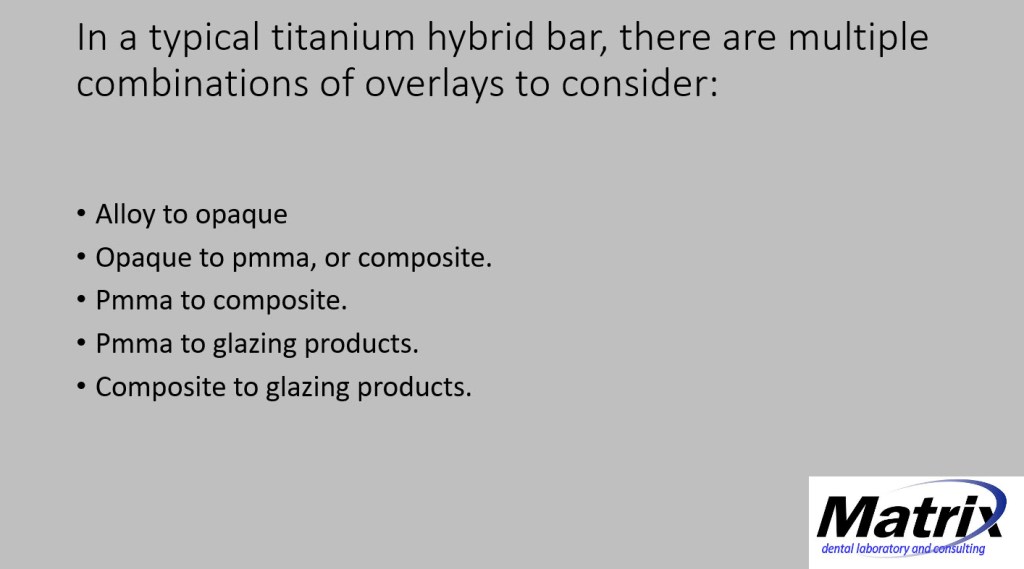
Listed are the potential layers required to take a hybrid titanium to acrylic case to completion. In between each layer is a specific bonding primer needed to secure adhesion.
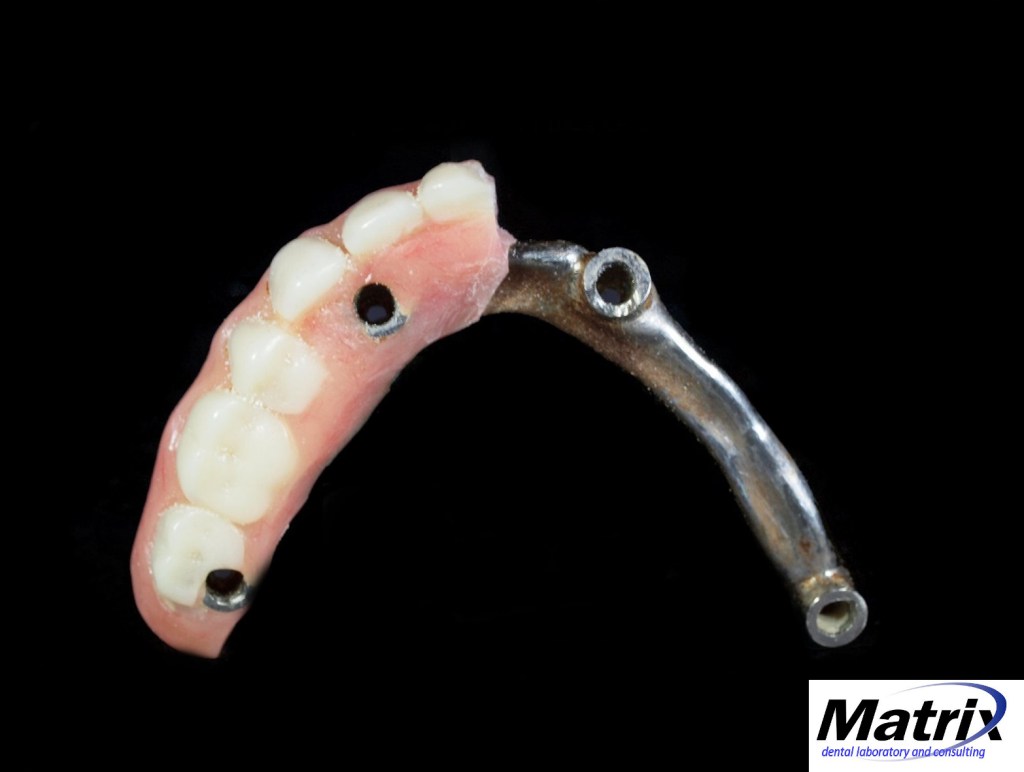
Shown is a case that came in for servicing i.e.: strip bar and replace acrylic and teeth. One whole side sheared away from the bar exposing nothing that would indicate pre-processing preparation. Theres a brown haze on the bar indicating microleakage between acrylic and bar was occurring. The shiny surface of the alloy also confirms lack of prep.
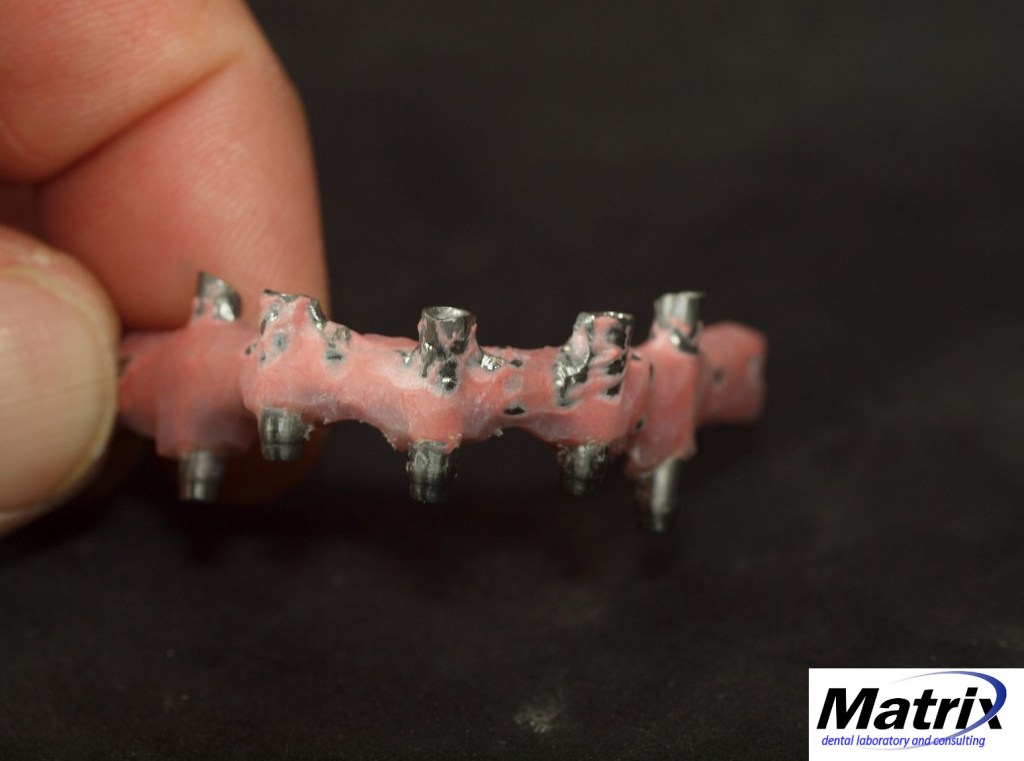
The 2nd example shows what correct bar prep looks like when trying to skin the bar of acrylic and teeth. bar to opaque, opaque to acrylic a bear to remove. No flaking away of either material from the other.
These are the kinds of things that my lab work, presentations and lab consulting bring to the table.
zaleske@gmail.com

